Your Salesforce admin is brilliant. She can configure anything you throw at her — flows, reports, permission sets, custom objects. But lately, the same pattern keeps repeating: leadership asks for a new feature, the admin builds it, and three weeks later someone realizes it does not actually solve the problem the business was trying to solve. The build was technically correct. The requirements were wrong.
This is the gap a salesforce business analyst fills. The BA is the person who sits between your business stakeholders and your technical team, making sure the right problems get solved before anyone starts building. If your Salesforce projects keep delivering technically sound solutions that miss the business mark, you probably need a Business Analyst — and you may have needed one for a while.
What a Salesforce Business Analyst Actually Does
The salesforce business analyst role is often confused with the admin role — and in smaller organizations, the same person may do both. But Salesforce’s own Trailhead comparison draws a clear line: administrators are operational — they configure, maintain, and optimize the platform. Business analysts are strategic — they elicit requirements, analyze processes, and ensure solutions align with business goals.
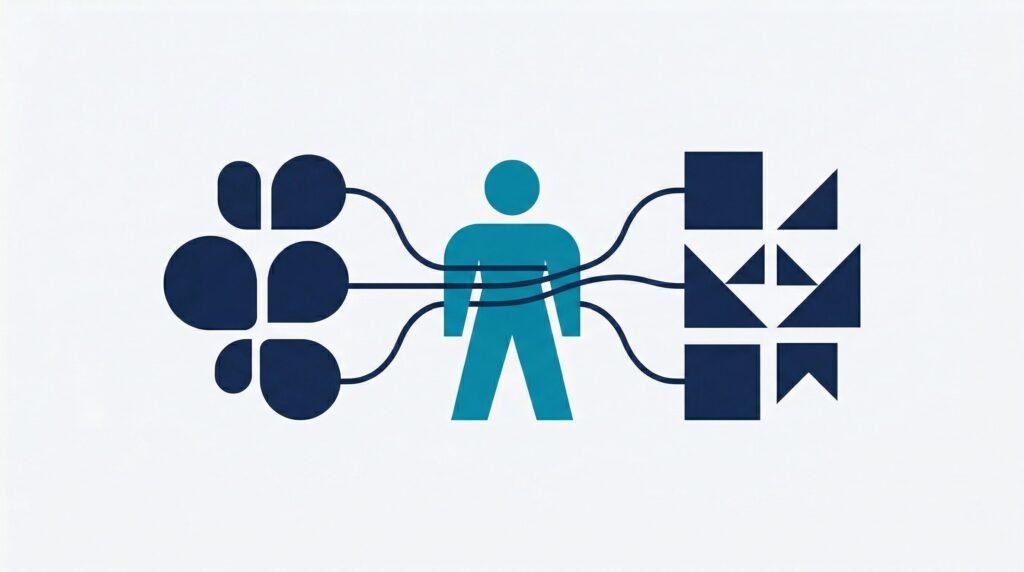
Think of the BA as an interpreter. When the VP of Sales says “I need better pipeline visibility,” the BA translates that into specific requirements: which stages need tracking, what metrics matter, how the data should be segmented, and what the reports need to show. Without that translation layer, the admin builds what they think was requested — and the VP gets reports that technically exist but do not answer the questions they actually had.
Core Responsibilities
- Requirements gathering and documentation. Conducting stakeholder interviews, workshops, and discovery sessions to understand what the business needs — not just what they ask for.
- Process mapping and gap analysis. Documenting current-state workflows, identifying inefficiencies, and designing future-state processes that Salesforce can support.
- User story creation. Translating business needs into structured user stories with clear acceptance criteria that developers and admins can act on.
- Solution design collaboration. Working with admins and developers to evaluate whether a requirement is best solved with declarative tools, custom code, or an AppExchange solution.
- Testing and validation. Supporting user acceptance testing (UAT) to confirm that what was built matches what was requested.
- Change management and training. Ensuring end users adopt new features and understand how to use them effectively.
Salesforce Business Analyst vs. Salesforce Admin
This is the question every hiring manager asks: “Can’t my admin just do this?” Sometimes, yes. In smaller organizations with straightforward Salesforce needs, an experienced admin can handle requirements gathering alongside their configuration work. But as your org grows in complexity, the two roles diverge significantly.
| Dimension | Salesforce Admin | Salesforce Business Analyst |
|---|---|---|
| Focus | Platform efficiency — making Salesforce work well | Business alignment — making Salesforce solve the right problems |
| Day-to-day work | Configuration, user management, automation, data maintenance | Requirements gathering, process mapping, user stories, stakeholder communication |
| Key skill | Deep platform knowledge | Strong analytical and communication skills |
| Interaction | Works primarily within Salesforce | Works between stakeholders and the technical team |
| Perspective | “How do I build this?” | “Should we build this, and what exactly should it do?” |
For a deeper look at the admin role and how it compares to other Salesforce positions, see our guide on admin vs. developer: which should you hire first?
When You Need to Hire a Salesforce Business Analyst
Not every organization needs a dedicated BA on day one. But there are clear signals that your Salesforce operation has outgrown the “admin does everything” model:
- Your implementations keep missing the mark. If stakeholders consistently say “that’s not what I asked for” after a feature ships, you have a requirements problem — not a technical one.
- Your admin is overwhelmed. When your admin is handling daily support, building automations, managing data, and trying to gather requirements simultaneously, something will slip. For help deciding how to structure these roles, see our guide on how to structure your Salesforce team.
- You are starting a major implementation or migration. According to Salesforce Ben’s analysis, the demand-to-supply ratio for Business Analysts to Administrators in North America exceeds 3:1.
- Multiple departments use Salesforce with competing priorities. You need someone who can facilitate cross-functional alignment — not just pick up the next ticket.
- Your Salesforce roadmap is growing faster than your team’s capacity. A BA helps prioritize, sequence, and scope projects so your technical team builds the most valuable features first.
What to Look for When Hiring
Hiring a salesforce business analyst requires evaluating a different set of skills than you would for an admin or developer.
Must-Have Skills
- Requirements elicitation. The ability to ask the right questions and draw out what stakeholders actually need.
- Process mapping and documentation. Proficiency with Lucidchart, Visio, or Miro for creating process flows.
- Salesforce platform knowledge. A BA does not need to build automations, but they need to understand what is possible on the platform.
- Communication across audiences. Explaining technical concepts to business leaders and translating business goals into specifications.
- Agile methodology experience. Writing user stories, managing backlogs, and participating in sprint ceremonies.
Certifications That Matter
The Salesforce Business Analyst certification is the most directly relevant credential — 60 questions, 105 minutes, 72% passing score, $200 fee. For a broader view, see our guide to Salesforce certifications that matter when hiring.
Outside Salesforce, CBAP and Certified ScrumMaster (CSM) credentials are both valuable.
What a Salesforce Business Analyst Costs
According to PassITExams’ 2026 salary data, the average salary is approximately $113,000 per year, with ranges between $91,000 and $142,000. Levels.fyi shows total compensation from $125,000 to $234,000 at Salesforce itself. For broader context, see our 2026 Salesforce salary guide.
Contract BAs typically charge $75–$150 per hour. A 3-month engagement at 30 hours per week costs $27,000–$54,000 — often less than the cost of a single failed requirements cycle.
A Mini Case: The Implementation That Succeeded on the Second Try
A regional healthcare company attempted to implement Salesforce Health Cloud with just their admin and a consulting developer. The admin gathered requirements by emailing stakeholders a spreadsheet. Six months and $80,000 later, the system was live — and nobody used it. The workflows did not match how the team actually operated.
On the second attempt, they brought in a BA first. She spent three weeks conducting workshops, mapping workflows, and documenting user stories. The second implementation took four months, cost $45,000, and had 85% user adoption in the first month. The BA’s salary for those three months was $28,000. Skipping her the first time cost $80,000 in wasted work plus six months of delayed value.
Full-Time BA vs. Fractional or Contract
| Situation | Recommended Model |
|---|---|
| New implementation or major migration | Contract BA for the project duration (3–6 months) |
| Continuous enhancement backlog across departments | Full-time BA |
| Quarterly project cadence with gaps between projects | Fractional BA (10–20 hours/week) |
| Small org with simple Salesforce needs | Admin handles BA tasks (no dedicated BA needed) |
For a broader look at internal vs. external models, see our article on Salesforce consultant vs. in-house hire.
The Role Your Salesforce Team Is Probably Missing
The salesforce business analyst is the most underrated role in the ecosystem — and the one most likely to determine whether your next project succeeds or fails. If your projects take longer than expected, stakeholders keep requesting rework, or your admin is stretched too thin, it is time to bring in a Business Analyst. The investment pays for itself on the first project.
Need help finding a Salesforce Business Analyst? Explore our recruiting services or get in touch to discuss your needs.
Frequently Asked Questions
What is the difference between a Salesforce Business Analyst and a Salesforce Admin?
A Salesforce Admin is operational — they configure, maintain, and optimize the platform. A salesforce business analyst is strategic — they gather requirements, analyze processes, and ensure solutions align with business goals. In smaller organizations one person may handle both, but as complexity grows, separating the roles leads to better outcomes.
How much does a Salesforce Business Analyst earn?
The average salary is approximately $113,000 per year, with entry-level BAs earning $70,000–$87,000 and senior BAs earning $94,000–$173,000+. Contract BAs typically charge $75–$150 per hour.
Do I need a dedicated Salesforce Business Analyst?
Not always. Small organizations with simple Salesforce needs can have their admin handle BA tasks. But if your implementations keep missing requirements, your admin is overwhelmed, or you are starting a major project, a dedicated BA — full-time, fractional, or contract — will save you time and money.