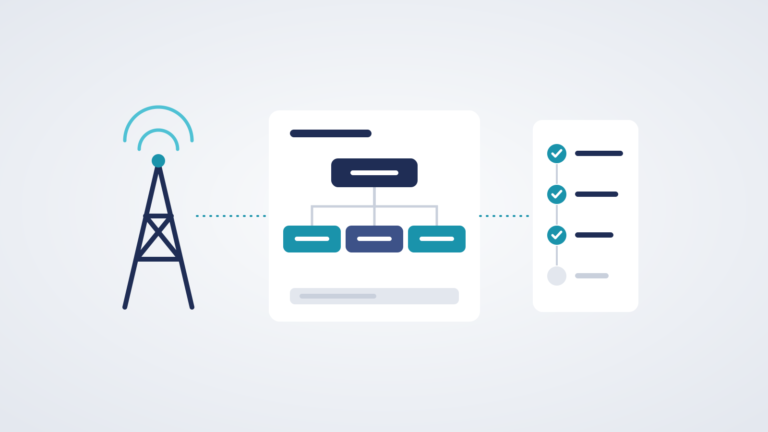
The pilot worked. A service agent answered order questions in a sandbox, and the demo impressed the leadership team. Then the real questions arrived. Which customer data can the agent see? What happens when it gets a refund wrong? How will you know what it did last Tuesday? Who approves a change to its instructions? Nobody on the team had designed for any of that.
That gap is why companies are now looking to hire an Agentforce architect. Building one agent is a project. Running a fleet of agents that touch customer data, call other systems, and act without a person clicking a button is an architecture problem.
This guide explains what an Agentforce architect does, how the role differs from solution and technical architects, the skills to look for, which credentials matter when no dedicated certification exists yet, what to pay, and how to assess candidates for one of the newest roles in the Salesforce ecosystem.
Table of Contents
What an Agentforce Architect Does
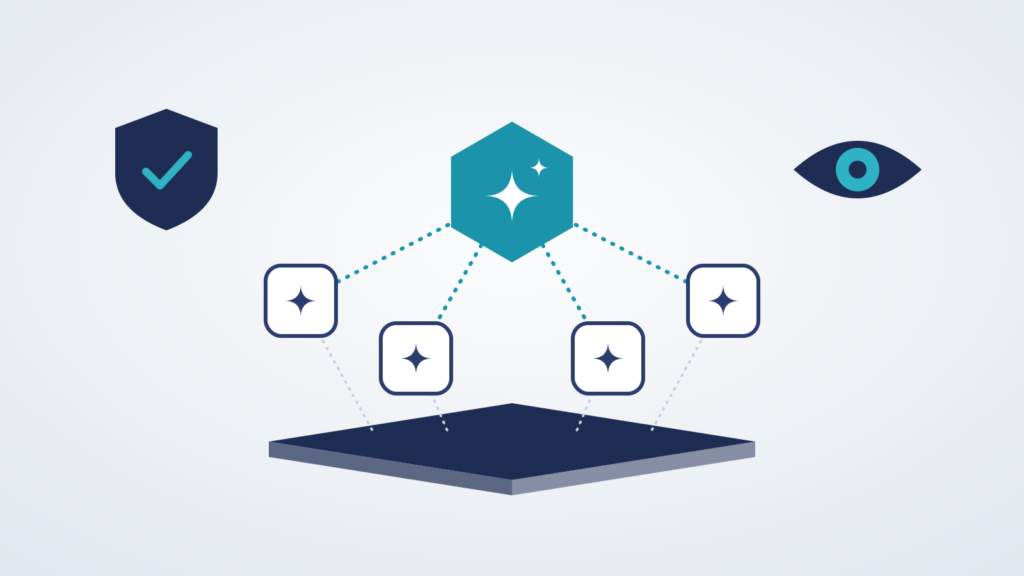
An Agentforce architect designs how AI agents fit into a company’s Salesforce estate: what they know, what they can do, how they are kept safe, and how anyone can tell whether they are working.
Salesforce itself frames this as a new architecture discipline. In its Agentic Enterprise architecture announcement, Salesforce described adding four new layers to the traditional seven layers of enterprise IT, including a semantic layer that serves as the agent’s knowledge layer. The Salesforce Architecture Center’s Enterprise Agentic Architecture and Design Patterns guide goes further, describing patterns from single agents to orchestrator and supervisor agents that coordinate Salesforce agents with agents from other vendors.
In practice, the role covers six areas:
- Data and grounding. Which data each agent can draw on, how it reaches that data, and how it stays accurate. Most of this runs through Data 360.
- Agent design. How work is split across agents, topics, and actions, and where an agent should hand off to a person.
- Orchestration and integration. How agents call Apex, Flow, APIs, MuleSoft, and other systems, and how multiple agents coordinate.
- Trust and security. Authentication, authorization, least-privilege access for agents, and protection of sensitive data.
- Testing and observability. How agents are tested before release and how their behavior is monitored and audited after.
- Governance and lifecycle. Who approves changes, how agents move from sandbox to production, and how they are retired.
Those last three are where early agent projects often struggle, and they are also the focus of Salesforce’s own architect sessions at Dreamforce 2026, which cover authentication, authorization, and audit for agents along with tools for agent observability and multi-agent orchestration.

Agentforce Architect vs Solution Architect vs Agentforce Specialist
This role overlaps with roles you may already have. The difference is scope.
| Role | Main focus | Typical background |
|---|---|---|
| Agentforce specialist | Configuring and tuning individual agents: topics, instructions, actions, testing | Admin or consultant who has built agents |
| Solution architect | Fitting Salesforce, including agents, to business processes | Senior consultant or business analyst |
| Technical architect | Integration, identity, security, and scale across the platform | Senior developer or integration specialist |
| Agentforce architect | The full agent estate: data access, orchestration, trust, observability, and governance | Technical or solution architect who has shipped agents to production |
Some companies call this person a Salesforce AI architect or an AI agent architect. The title matters less than the scope.
Not every company needs one yet. If you are running one or two agents with limited data access, a strong Agentforce specialist working with your existing architect is usually enough. You need a dedicated Agentforce architect when agents touch sensitive customer data, call several external systems, need to coordinate with each other or with other vendors’ agents, or operate in a regulated industry.
For the broader architect landscape, our guide to how to hire Salesforce architects compares solution architects, technical architects, and CTAs.
Skills to Look for in an Agentforce Architect
A strong candidate combines classic Salesforce architecture with a newer set of AI skills. Look for both.
Architecture foundations
- Data modeling, sharing, and security design across large orgs
- Integration patterns, APIs, and event-driven design
- Identity and access management, including how non-human users authenticate
Agent and AI skills
- Agent design: splitting work into agents, topics, and actions, and deciding where people stay in the loop
- Grounding: connecting agents to the right data through Data 360, and keeping that data clean and current
- Prompt and instruction design, with an understanding of how agents reason and where they fail
- Multi-agent orchestration, including coordination with agents from other vendors through emerging standards such as the A2A protocol referenced in Salesforce’s design patterns guide
Trust, testing, and operations
- Least-privilege access for agents, data masking, and how Salesforce’s Trust Layer protects sensitive data
- Test strategy for agent behavior before release and after every change
- Monitoring, audit trails, and observability for what agents actually do in production
- Release and change management for agent instructions, actions, and permissions
Communication
- Explaining agent risks and trade-offs to executives, legal, security, and compliance teams in plain language
The skill that separates real agent architects from enthusiasts is production experience. Ask what went live, how many users or customers it served, what broke, and how they fixed it.
Agentforce Architect Credentials
As of October 2026, Salesforce does not offer a dedicated Agentforce architect certification. Hiring managers have to read a combination of credentials instead.
| Credential | What it signals |
|---|---|
| Agentforce Specialist | Hands-on knowledge of configuring and optimizing Agentforce. Salesforce lists it alongside its architect certifications |
| Data 360 Consultant | Understanding of the data foundation agents are grounded in |
| Application Architect | Depth in data modeling and sharing, which governs what agents can see |
| System Architect | Depth in integration, identity, and the development lifecycle |
| Certified Technical Architect | Proven enterprise architecture judgment at the highest level |
The strongest candidates usually pair Agentforce Specialist with Application Architect, System Architect, or both. That combination shows they understand agents and the platform those agents run on.
Two cautions. First, the Agentforce Specialist exam can be passed by people who have never deployed an agent, so treat it as a filter, not proof. Second, Salesforce’s catalog is changing quickly, and new AI credentials may appear. Verify every credential on Salesforce’s credential verification page and check our guide to the Salesforce certifications that matter when hiring for updates.
What to Pay an Agentforce Architect
There is not yet enough market data to publish a separate salary band for this role. The closest benchmark is the technical architect range from our 2027 Salesforce salary guide:
| Level | US base salary | Typical total comp |
|---|---|---|
| Technical architect (8 to 12 years) | $160,000 to $190,000 | $185,000 to $225,000 |
| Senior technical architect (12+ years) | $185,000 to $230,000 | $215,000 to $290,000 |
| Principal technical architect or CTA | $220,000 to $280,000+ | $270,000 to $380,000+ |
Contract technical architects bill roughly $130 to $210 an hour.
Our salary guide found that shipped Agentforce and Data 360 work is currently among the most valuable experience on a Salesforce resume, and that the premium is largest at the senior and architect levels. An architect with production agent deployments behind them should be priced toward the top of the band, not the middle. Expect that premium to narrow over time as more architects gain agent experience.
If your budget sits at the bottom of the range, consider a contract architect for the design phase while you develop an internal architect, or pair a strong Agentforce specialist with your existing technical architect.
How to Assess and Hire an Agentforce Architect
Run a design scenario
Give the candidate a realistic problem and 60 to 90 minutes. For example: “We want a service agent that handles order changes and refunds. Order data lives in our ERP. Refunds above a set amount need a person to approve them. Customers in two regions have different privacy rules. Design it.”
Strong candidates ask about data volumes, existing integrations, and who owns the process before they design anything. Then listen for:
- Least-privilege access and a clear boundary on what the agent can and cannot do
- A handoff point where a person approves or takes over
- How the agent is tested before launch and after each change
- How every action is logged, audited, and reversible
- How regional privacy rules shape the data the agent can use
Walk through a production deployment
Ask the candidate to describe an agent they took to production: the use case, the architecture, the results, and what went wrong. Architects who can describe a real failure and the fix are far more valuable than those who only describe demos.
Put them in front of risk owners
A 30-minute conversation with someone from security, legal, or compliance shows whether the candidate can explain agent risks in plain language. That skill decides whether agent projects get approved.
Know where to look
These architects are rare, and most are not applying to job boards. The best sources are consulting partners with Agentforce practices, technical architects inside companies that ran early agent programs, and people who present on agent architecture at community events. For a role this scarce, a retained search usually works better than a posting. Our comparison of a Salesforce headhunter vs staffing vs placement agency explains why, and our guide to Salesforce Agentforce hiring covers the specialist and developer roles that work alongside this architect.
Frequently Asked Questions
What does an Agentforce architect do?
An Agentforce architect designs how AI agents work across a company’s Salesforce environment, including the data agents can use, how they are split into topics and actions, how they integrate with other systems and agents, how they are secured, and how they are tested, monitored, and governed.
Is there an Agentforce architect certification?
Not as of October 2026. Most employers look for the Agentforce Specialist certification combined with architect credentials such as Application Architect, System Architect, or Certified Technical Architect, plus proven production experience.
How is an Agentforce architect different from an Agentforce specialist?
An Agentforce specialist configures and tunes individual agents. An Agentforce architect designs the full agent estate, including data access, orchestration, security, observability, and governance across many agents.
What is a Salesforce AI architect?
Salesforce AI architect is another common title for the same role. It usually covers Agentforce, Data 360, and the security and governance that sit around AI on the Salesforce platform.
How much does an Agentforce architect earn?
There is no separate market band yet. They generally benchmark against senior technical architects, roughly $185,000 to $230,000 in US base salary, with those who have shipped agents to production priced toward the top.
When do I need an Agentforce architect?
You need one when agents touch sensitive data, call several external systems, coordinate with other agents, or operate in a regulated industry. For one or two simple agents, an Agentforce specialist working with your existing architect is often enough.
Design Agents Before You Scale Them
One agent can be built by a capable specialist. A dozen agents that touch customer data, call other systems, and act on their own need an Agentforce architect who has designed for trust, testing, and governance from the start. Hire for production experience, test candidates with a scenario from your own business, and price the role like the scarce, senior position it is.
Hiring an Agentforce architect? Talk to our Salesforce recruiters. We find architects who have taken agents to production, not just through a demo, and we can tell you what the market looks like for your role today.