A field technician drives to a site in a valley with no signal. Her work order, the customer’s equipment history, and the parts list all live in Salesforce, but the app spins and shows nothing until she drives back to the highway. Meanwhile, the sales team wants a branded app for distributors, and the product team wants a customer app that talks to the same Salesforce data. Nobody on the team has shipped a mobile app before.
A Salesforce mobile developer is hired to solve problems like these. The role builds mobile experiences on Salesforce data, from offline-ready components inside the Salesforce mobile app to fully custom iOS and Android apps. Few developers have deep experience in both Salesforce and mobile, which makes the role hard to fill.
This guide explains the three ways to build Salesforce mobile apps, what the developer does, how the role compares with other developers, credentials, five skills to test, pay, and how to hire.
Table of Contents
Three Ways to Build Salesforce Mobile Apps
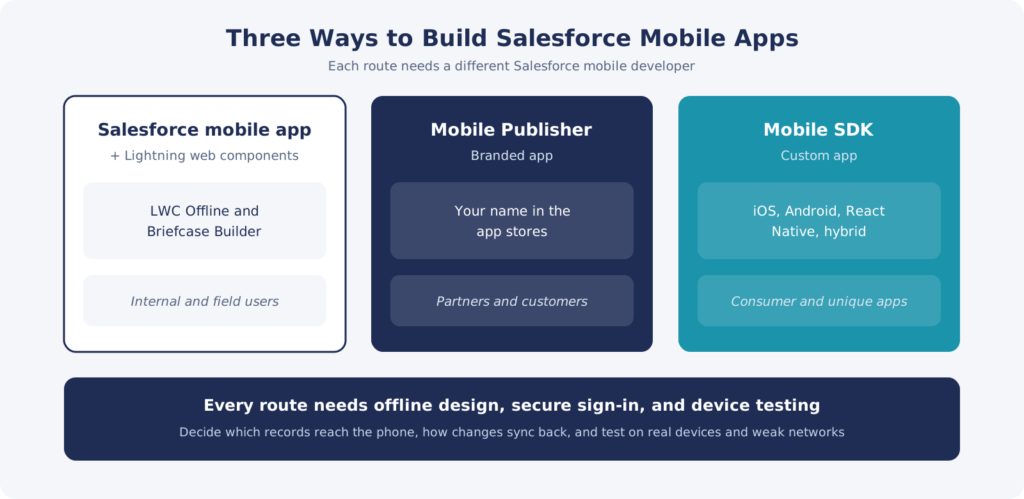
The right Salesforce mobile developer depends on which route your project takes. Salesforce offers three main options.
1. Extend the Salesforce mobile app
Many teams start with the Salesforce mobile app and add Lightning web components to it. Salesforce’s LWC Offline developer guide describes LWC Offline as an optional, opt-in enhancement to existing Salesforce mobile apps, available only for mobile devices. Briefcase Builder lets teams define which records to preload, a priming engine loads them before users go offline, and a durable on-device cache holds those records, including changes made offline.
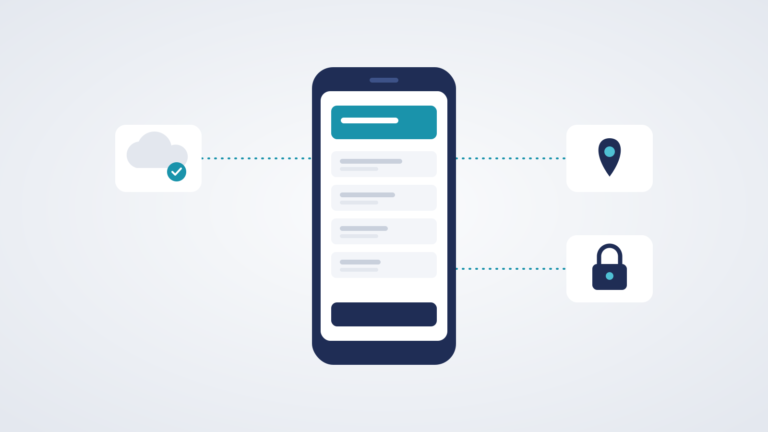
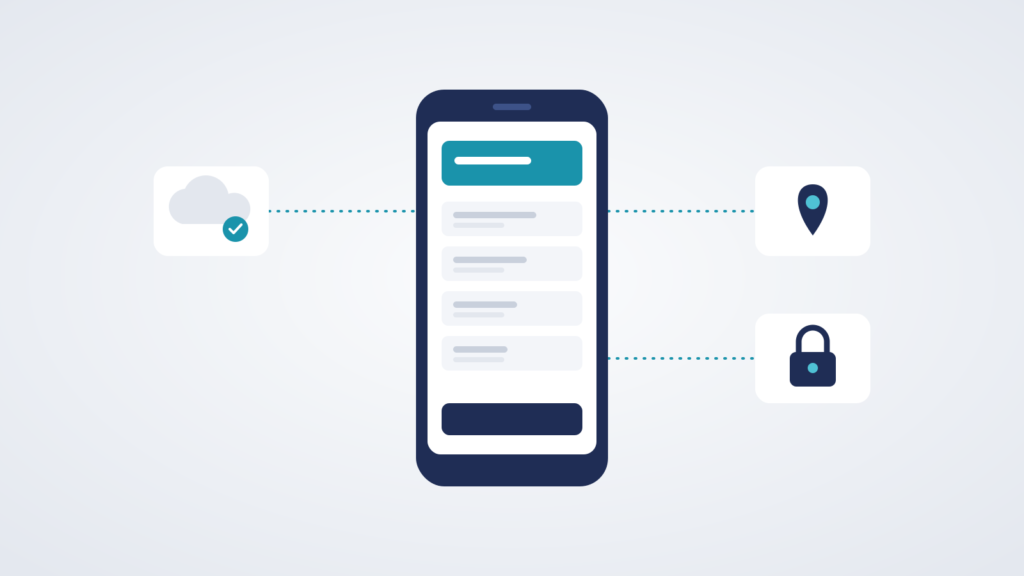
Components can also use device features. The Lightning Web Components mobile capabilities guide says these let a component use hardware such as the camera and location detection, and platform features such as contacts and calendar data.
2. Brand it with Mobile Publisher
According to Salesforce’s LWC for mobile developer center, Mobile Publisher lets you brand your own version of the Salesforce mobile app or Experience Cloud sites. It suits companies that want an app in the app stores under their own name for partners, distributors, or customers, without building one from scratch.
3. Build a custom app with Mobile SDK
For full control, teams use Salesforce Mobile SDK. The Mobile SDK developer guide says it lets you use the Salesforce platform within stand-alone mobile apps that access Salesforce data through the device’s native operating system. It covers native iOS, native Android, HTML5 and hybrid, and React Native development, and apps can be configured to move between online and offline states.
| Route | Best for | Main skills |
|---|---|---|
| Salesforce mobile app with LWC | Internal users, field and sales teams | Lightning Web Components, LWC Offline, Briefcase Builder |
| Mobile Publisher | Branded apps for partners and customers | Experience Cloud, app store publishing |
| Custom app with Mobile SDK | Consumer apps and unique experiences | iOS, Android, or React Native, plus Salesforce APIs |
What a Salesforce Mobile Developer Does
A Salesforce mobile developer designs and builds mobile experiences on Salesforce data. Typical work includes:
| Area | What the developer does |
|---|---|
| Mobile components | Builds Lightning web components that work well on small screens and touch |
| Offline data | Defines which records load before users go offline and how changes sync back |
| Device features | Uses the camera, location, contacts, and calendar inside components |
| Custom apps | Builds native or React Native apps with Mobile SDK and Salesforce APIs |
| Security and sign-in | Sets up authentication, secure on-device storage, and access controls |
| Testing and release | Tests on real devices and networks, and manages app store releases |
Mobile work is common in field service, where technicians rely on offline access. Our guide to the Salesforce Field Service consultant covers the business side of those projects.
Salesforce Mobile Developer vs Other Developers
| Role | Main focus | When you need it |
|---|---|---|
| Salesforce mobile developer | Mobile components, offline, Mobile SDK apps | Field teams, branded apps, custom mobile experiences |
| Salesforce developer | Apex, Lightning Web Components, integrations on the desktop | Most custom Salesforce work |
| Experience Cloud developer | Portals and self-service sites | Partner and customer sites, often the base for Mobile Publisher |
| Native iOS or Android developer | Mobile apps without Salesforce depth | Consumer app work, paired with a Salesforce developer |
Mobile is one of many specialist Salesforce roles, and our guide to Salesforce roles shows where it fits. Many teams pair a strong Salesforce developer with mobile skills alongside a native mobile developer for complex apps. Our guides to hiring a Salesforce developer and hiring an Experience Cloud developer cover those roles.
Certifications and Credentials
Salesforce does not offer a certification dedicated to mobile development. The most relevant Salesforce credential is the Platform Developer certification, which covers Apex and Lightning Web Components. Verify any credential on the credential verification page, and see our guide to the Salesforce certifications that matter when hiring.
For custom apps, look for evidence of shipped iOS, Android, or React Native work, such as apps in the stores, public code, or detailed project descriptions. Portfolio evidence matters more than certificates for this role.
5 Skills to Look For in a Salesforce Mobile Developer
These five skills separate a Salesforce mobile developer who ships reliable apps from one who only builds desktop components.
1. Lightning Web Components for mobile
The developer should design components for small screens, touch, and slow networks. Ask how they test components on mobile and what they change compared with desktop.
2. Offline design
Offline is where mobile projects succeed or fail. Look for experience with LWC Offline and Briefcase Builder, or offline storage in Mobile SDK apps. Ask how they decide which records to preload and how they handle a conflict when two people change the same record offline.
3. Native or cross-platform app development
For custom apps, the developer needs real iOS, Android, or React Native skills on top of Salesforce knowledge. Ask which app they shipped most recently and how they handled releases and crash reports.
4. Mobile security and authentication
Mobile apps carry data off-site. A strong Salesforce mobile developer understands sign-in flows, secure storage on the device, and how to limit what data reaches the phone. Our guide to the Salesforce security consultant covers the wider security picture.
5. Device testing and performance
Apps behave differently on old phones, weak signals, and different operating system versions. App store releases also need a repeatable pipeline, which our guide to hiring a Salesforce DevOps engineer covers. Look for a testing routine that covers real devices and poor networks, and for someone who works with QA. Our guide to the Salesforce QA tester explains how testers help.
Salesforce Mobile Developer Salary in 2027
Our 2027 Salesforce salary guide does not have a separate mobile band. The Salesforce developer band is the closest benchmark:
| Level | Salesforce developer base (benchmark) |
|---|---|
| Junior (0 to 2 years) | $85,000 to $110,000 |
| Mid-level (3 to 5 years) | $110,000 to $140,000 |
| Senior (5 to 8 years) | $135,000 to $175,000 |
| Lead or staff (8+ years) | $160,000 to $200,000 |
Developers with both Salesforce and shipped native app experience are rare and usually sit at the top of the band. Contract Salesforce developers typically bill $100 to $170 an hour, according to our Salesforce contractor rates guide.
How to Hire a Salesforce Mobile Developer
Start with the users
List who will use the app, where they work, and what they need when the signal drops. Field technicians, sales reps, partners, and consumers need very different apps. A short list of the top five tasks on mobile keeps the first release focused and gives candidates something real to design against.
Choose the route next
Decide whether you are extending the Salesforce mobile app, publishing a branded app, or building a custom one. Each route needs a different Salesforce mobile developer, and the job description should say which.
Test with a real scenario
Ask candidates to design an offline work order screen: what loads before the user goes offline, what they can edit, and what happens when they reconnect. For custom apps, add a question about sign-in and secure storage.
Ask to see shipped work
Ask for apps in the stores, components in production, or a demo. Ask what broke after launch and how they fixed it.
Choose contract or full time
A first mobile build or a branded app launch suits a contractor. A team that keeps adding mobile features needs a full-time developer. Our comparison of contract vs full-time Salesforce hires covers the trade-offs.
Watch for red flags
- Has never tested on real devices or poor networks
- Cannot explain how offline changes sync back
- Treats mobile as desktop components on a smaller screen
- Has no plan for sign-in and secure on-device storage
Our recruiters are Salesforce certified and screen every Salesforce mobile developer on real platform and mobile experience. We also place contractors from a vetted network for first builds and launches.
Frequently Asked Questions
What does a Salesforce mobile developer do?
A Salesforce mobile developer builds mobile experiences on Salesforce data: Lightning web components for the Salesforce mobile app, offline access, branded apps through Mobile Publisher, and custom iOS, Android, or React Native apps with Mobile SDK.
What is Salesforce Mobile SDK?
Mobile SDK lets developers build stand-alone mobile apps that use the Salesforce platform and access Salesforce data through the device’s native operating system. It supports native iOS, native Android, HTML5 and hybrid, and React Native development.
Can Salesforce work offline on mobile?
Yes. LWC Offline is an opt-in enhancement to Salesforce mobile apps that preloads records, caches them on the device, and holds changes made offline. Mobile SDK apps can also be configured to move between online and offline states.
What is Salesforce Mobile Publisher?
Mobile Publisher lets companies brand their own version of the Salesforce mobile app or Experience Cloud sites and publish it in the app stores.
Is there a Salesforce mobile developer certification?
No. The Platform Developer certification is the closest Salesforce credential. For custom apps, shipped iOS, Android, or React Native work matters more than any certificate.
How much does a Salesforce mobile developer earn?
Our 2027 salary guide has no separate mobile band. The Salesforce developer band runs from $85,000 for juniors to $200,000 for leads, and developers with shipped native app experience usually sit toward the top.
Find Your Salesforce Mobile Developer
The right hire knows which mobile route fits your project, designs for offline, protects data on the device, and tests on real phones. Choose the route first and ask to see shipped work.
Ready to hire a Salesforce mobile developer? Talk to our Salesforce recruiters.